
Research Discovery
Search Publications
Search published legal research by paper title, author, abstract, keywords, DOI, publication year, volume and issue.
Search Results
3,968 publications
Open Access
[1] J. C. Sharman, Shopping for Anonymous Shell Companies: An Audit Study of Anonymity and Crime in the International Financial System, 24 TJEP 127, 129, 2010.
[2] Fabiano Angélico and Lígia Zagato, SÃO PAULO: DOES CORRUPTION LIVE NEXT DOOR?, Transparency International (2017), http://www.jstor.com/stable/resrep20590.7.
[3] Larry R. Bateman, SHELL COMPANIES: A REGULATORY AND LEGAL FRAMEWORK, ProQuest LLC
(2016, https://www.proquest.com/openview/17c3884f84dbd2bbb7b5d2e8b5ae3fa9/1?cbl=18750&parentSessionId= hZD1gF6Ro8BCa%2FAu8kHta%2BTyhetdGa%2FquTLioKEDQj8%3D&pqorigsite=gscholar&parentSessionId=G DRjUG7ZCxi9hbqLyaiGvvB8aViXYbH0UrEpE%2F3aTa0%3D.
[4] Id.
[5] Id.
[6] Id.
[7] Financial Transparency Coalition, https://financialtransparency.org/about/, (last visited Oct. 6, 2023)
[8] TransparencyInternational,https://www.transparency.org/en/news/new-imf-anti-corruption-framework-3-things-
well-be-looking-for,(Last visited Oct.7 2023).
[9] Id.
[10] History, OECD, http://www.oecd.org/about/history/ [https://perma.cc/2FVSSEWS]
[11] Nicholas Vail,Cracking Shells: The Panama Papers & Looking to the European Union's Anti-Money Laundering Directive as a Framework for Implementing a Multilateral Agreement to Combat the Harmful Effects of Shell Companies,Texas A&M Review, (Oct. 7 2023 at 10 PM) https://scholarship.law.tamu.edu/lawreview/vol5/iss1/7/
[12] The companies act § 92 (2013).
The companies act § 164 (2013).
[13] Jos´e-de-Jesús Rocha-Salazar a, María-Jesús Segovia-Vargas, María-del-Mar CamachoMinano, Detection of shell companies in financial institutions using dynamic social network, ESWA 207 (2022) 117981, https://www.sciencedirect.com/science/article/pii/S095741742201209X
[14] Id.
[15] Sachet Singh and Abhishek K. Singh, Black Money and Voluntary Disclosure of Income Scheme: Two Sides of the Same Coin?, 1 KIIT Student L Rev 1 (2014)
[16] Ryan Hauer, Another Attempt at Patent Reform: S. 1013 The Patent Abuse Reduction Act of 2013, 24 DEPAUL
J. ART TECH. & INTELL. PROP. L., 371, 372
[17] Supra Note 16
[18] Id.
[19] Raghav Ohri, DHFL scam: Promoters Wadhawans set up 87 shell companies, says CBI charge sheet, The EconomicTimes(Nov.28,2022),https://economictimes.indiatimes.com/news/india/dhfl-scam-promoters-wadhawans- set-up-87-shell-companies-says-cbi-charge-sheet/articleshow/95812374.cms?from=mdr.
[20] DHFL fraud: The Wadhawan brothers, a multi-crore scam and ongoing cases, BusinessToday (Aug. 29, 2023), https://www.businesstoday.in/latest/corporate/story/dhfl-fraud-the-wadhawan-brothers-a-multi-crore-scam-and- ongoing-cases-396126-2023-08-29.
[21] Raghav Ohri, DHFL scam: Promoters Wadhawans set up 87 shell companies, says CBI charge sheet, The Economic Times (Nov. 28, 2022), https://economictimes.indiatimes.com/news/india/dhfl-scam-promoters- wadhawans-set-up-87-shell-companies-says-cbi-charge-sheet/articleshow/95812374.cms?from=mdr.
[22] Will Fitzgibbon, Law Firm’s Files Include Dozens of Companies and People Blacklisted by U.S. Authorities, ICIJ (Apr. 4, 2016), https://www.icij.org/investigations/panama-papers/20160404-sanctioned-blacklisted-offshore- clients/.
[23] Explore the Panama Papers Key Figures, ICIJ (Jan. 31, 2017), https://panamapapers.icij.org/graphs/.
[24] Amisha Raghuvanshi, The Embryonic Stage of Special Purpose Acquisition Companies in India: Prevailing Obstacles and the Way Forward, SCC Online Web Edition 103-110 (2022).
[25] Government identified 2,38,223 companies as shell companies between 2018-2021, (July 27, 2021), https://www.pib.gov.in/PressReleasePage.aspx?PRID=1739583.
[26] The companies act § 248 (2013).
[27] The companies act § 455 (2013).

Open Access
THE EVOLUTION OF HUMAN RIGHTS: TRACING ORIGINS AND DEVELOPMENT OF HUMAN RIGHTS LAW BY : MS. HEENA PARVEEN & AAYUSH BHARDWAJ
[1] Assistant Professor, GD Goenka University
[2] Law Student, GD Goenka University
[3] Sen, A. (2009). The Idea of Justice. Harvard University Press.
[4] Kaur, S. (2014). Philosophies and Human Rights. Journal of Social Sciences Research, 6, 997-999.
[5] A Short History of Human Rights, http://hrlibrary.umn.edu/edumat/hreduseries/hereandnow/Part- 1/short-history.htm.
[6] Magna Carta (1215)
[7] English Bill of Rights, 1689
[8] French Declaration on the Rights of Man and Citizen (1789)
[9] U.S. Const. amend. I (Bill of Rights)
[10] Dr. Surinder Kaur, Historical Development of Human Rights, 6 Journal of Social Sciences Research 997-999 (2014).
[11] The Bhagavad Gita (Chapter 5, Verse 18)
[12] Surah 42: Ash-Shura: 21)
[13] Mazumdar, S. (2016). Human Rights Jurisprudence in India: A Critical Review. Oxford University Press.
[14] Sikhism. (n.d.). BBC Religion.
[15] The French Declaration of the Rights of Man and of the Citizen. (1789).
[16] Das, V. (2007). Life and Words: Violence and the Descent into the Ordinary. University of California Press.
[17] Lock, J. (1690). Two Treatises of Government.
[18] Rousseau, J. J. (1762). The Social Contract.
[19] Voltaire. (1763). Treatise on Tolerance.
[20] Henkin, L. (1999). The Age of Rights. Columbia University Press.
[21] The International Labor Organization (ILO).
[22] Mohammad Habibur Rahman & Mohammad Habibur Rahman, The Universal Declaration of Human Rights (UDHR) as Foundation of the International Human Rights Law (Dec. 11, 2020).
[23] Cairo Declaration on Human Rights in Islam, adopted August 5, 1990, OIC Res. 3/10, Annex, U.N. GAOR, 45th Sess., Supp. No. 18, at 14, U.N. Doc. A/45/18 (1990).
[24] African Charter on Human and Peoples' Rights, adopted June 27, 1981, OAU Doc. CAB/LEG/67/3 rev. 5, 21 I.L.M. 58 (1982).
[25] Sonia Cardenas & Rebecca Root. Human Rights in Latin America: A Politics of Transformation. 2nd ed. University of Pennsylvania Press, 2022
[26] Tawhida Ahmed & Israel de Jesús Butler, The European Union and Human Rights: An International Law Perspective, 17 European Journal of International Law 771–801 (2006).
[27] Nidhi Madan. History & Development of Human Rights in Indian. IOSR Journal of Humanities and Social Science. Vol. 22, Issue 6, Ver. 9, pp. 01-06 (June 2017)
[28] Sanatana Dharma: an advanced text book of Hindu religion and ethics, (Dec. 19, 2011)
[29] S. Radhakrishnan, Development of Human Rights in an Indian Context, 36 Int'l J. Legal Info. 2, article 14 (2008).
[30] Keshavananda Bharati v. State of Kerala, AIR 1973 SC 1461 (India).
[31] Jolly George Varghese v. Bank of Cochin, AIR 1980 SC 470 (India).
[32] Chairman, Railway Board and others v. Mrs. Chandrima Das, AIR 2000 SC 988 (India)
[33] International Covenant on Civil and Political Rights, opened for signature Dec. 16, 1966, 999
U.N.T.S. 171 (entered into force Mar. 23, 1976).
[34] International Covenant on Economic, Social and Cultural Rights, opened for signature Dec. 16, 1966, 993 U.N.T.S. 3 (entered into force Jan. 3, 1976).
[35] Convention on the Rights of the Child, opened for signature Nov. 20, 1989, 1577 U.N.T.S. 3 (entered into force Sept. 2, 1990).
[36] Convention on the Elimination of All Forms of Discrimination Against Women, Dec. 18, 1979, 1249
U.N.T.S. 13 (entered into force Sept. 3, 1981).
[37] Convention on the Rights of Persons with Disabilities (CRPD), Dec. 13, 2006, 2515 U.N.T.S. 3
(entered into force May 3, 2008).
[38] Convention Against Torture and Other Cruel, Inhuman or Degrading Treatment or Punishment (CAT), Dec. 10, 1984, S. Treaty Doc. No. 100-20, 1465 U.N.T.S. 85 (entered into force June 26, 1987).
[39] International Convention on the Elimination of All Forms of Racial Discrimination (CERD), Dec. 21, 1965, 660 U.N.T.S. 195 (entered into force Jan. 4, 1969)
[40] Das, Veena. Life and Words: Violence and the Descent into the Ordinary. University of California Press, 2007.
[41] Scheduled Castes and Scheduled Tribes (Prevention of Atrocities) Act, 1989, Pub. L. No. 33, 1989 (India).
[42] Persons with Disabilities (Equal Opportunities, Protection of Rights and Full Participation) Act, 1995, Pub. L. No. 1, 1996 (India).
[43] Protection of Women from Domestic Violence Act, 2005, Pub. L. No. 43, 2005 (India).
[44] Right to Education Act, 2009, Pub. L. No. 35, 2009 (India).
[45] The Protection of Children from Sexual Offences (POCSO) Act, 2012, Pub. L. No. 32, 2012 (India)
[46] The Sexual Harassment of Women at Workplace (Prevention, Prohibition, and Redressal) Act, 2013, Pub. L. No. 14, 2013 (India).
[47] National Food Security Act, 2013, Pub. L. No. 20, 2013 (India).
[48] The Juvenile Justice (Care and Protection of Children) Act, 2015, Pub. L. No. 2, 2016 (India).
[49] The Rights of Persons with Disabilities Act, 2016, Pub. L. No. 49, 2016 (India).
[50] The Mental Healthcare Act, 2017, Pub. L. No. 10, 2017 (India)
[51] The Transgender Persons (Protection of Rights) Act, 2021, Pub. L. No. 4, 2021 (India).
[52] Mazumdar, S. Human Rights Jurisprudence in India: A Critical Review. Oxford University Press, 2016.
[53] Chandrachud, R. S. Balancing Constitutional Rights in India. Oxford University Press, 2019.
[54] Baxi, Upendra. "Inhuman Wrongs and Human Rights: Unconscionability as Legal Form." Indian Journal of Human Rights 8, no. 2 (2004): 24-56.
[55] Sen, Amartya. The Idea of Justice. Harvard University Press, 2009.
[56] Chandrachud, R. S. Balancing Constitutional Rights in India. Oxford University Press, 2019.
[57] AIR 1997 SC 3011
[58] (2014) 5 SCC 438
Open Access
MENSTRUAL LEAVE FOR WOMEN IN INDIA: LAW AND POLICY BY - DR. VIKAS POONIA
[1] Assistant Professor, Department of Law, Ch. Devi Lal University, Sirsa. Email- dr.vikaspoonia0007@gmail.com
[2]Nikore, Mitali. "Where are India’s working women." Irrational Economics| Lifestyle, the times of India. Date (2019).
[3] Nikore, Mitali. "Where are India’s working women? The fall and fall of India’s female labour participation rate." London School of Economics South Asia Blog, Retrieved from https://blogs. lse. ac. uk/southasia/2019/10/22/where-are-indias-working-women-the-falland-fall-of-indias-female-labour-participation-rate (2019).
[4] Swani, Rehmat. "Labor Resilience: Paid Menstrual Leave and Women’s Economic Empowerment in India." International Journal of Social Science and Economic Research 5 (2020).
[5] saumya rastogi, it’s 2020 and menstruation still remains a huge taboo in india, she the people (oct. 5,2020, 10:30 am), https://www.shethepeople.tv/top-stories/opinion/menstruation-taboo-india-gender-issues/
[6] Swani, Rehmat. "Labor Resilience: Paid Menstrual Leave and Women’s Economic Empowerment in India." International Journal of Social Science and Economic Research 5 (2020).
[7] pathak et al, , “the maternity leave incentive scheme, 2018: blessing in the pipeline for working women in india”, india corporate law, retrieved from https://corporate.cyrilamarchandblogs.com/2018/11/maternity-leave-incentive-scheme- 2018-blessing-pipeline-working-women-india/ 2018
[8] prasad, u. “india needs a menstrual leave policy”, hindu business line, retrieved from https://www.thehindubusinessline.com/opinion/india-needs-a-menstrual-leave- policy/article24105589.ece 2018
[9] worley, w. “the country where all women get a day off because of their period”, independent, retrieved from https://www.independent.co.uk/news/world/africa/zambia- period-day-off-women-menstruation-law-gender-womens-rights-a7509061.html 2017
[10] prasad, u. “india needs a menstrual leave policy”, hindu business line, retrieved from https://www.thehindubusinessline.com/opinion/india-needs-a-menstrual-leave- policy/article24105589.ece 2018
[11] Muller v. Oregon, 52 l.ed. 551
[12] indian constitution. art. 32
[13] https://www.ijalr.in/2020/08/menstruation-benefit-bill-2017.html accessed 2 march 2022
[15] menstruation benefits bill 2017
[16] Section 2
[17] Section 4
[18] Section 5
[19]Section 8
[20] Section 10
[21] https://blog.ipleaders.in/should-the-menstrual-benefit-bill-be-passed/
[22] priya bhalerao and aayush shah, menstrual leave – regressive or progressive? international journal of law management & humanities [issn 2581-5369] volume 3 | issue 5 2020
[23] kuntala lahiri-dutt and kathryn robinson, ‘period problems’ at the coal face, 89 fr 108 (2008) https://crawford.anu.edu.au/pdf/staff/rmap/lahiridutt/ja3_kld_robinson_period_problems.pdf
[24] labour standards law (law no. 49 of 7 april 1947) https://www.ilo.org/dyn/natlex/docs/webtext/27776/64846/e95jpn01.htm#a064 accessed 3 march 2022
[25] prithivi raj, antra pandit, implementation menstrual leave policy in india: an empirical study, nat. volatiles & essent. oils, 2021; 8(5): 2317-2322
Open Access
Muslim Women In India: A Socio-Legal Study By - Hena Dewan
[1] V.R Krishna Iyer , “Women and the Law in Modern India: A Plea for Gender Justice”, Religion and Law Review, vol. VII, (1998) ,p 1
[2]Rehana Siddiqui, “Socio-legal Status of Muslim Women In India: Some Observation of A social Scientist” Religion and Law Review, vol.VII . (1998) p. 59,
[3] For detail visit the SITE: https://www.indiacode.nic.in/
[4] AIR 1985 SC 925
[5] Manoranjan Ahliyat, “Role Of Indian Judiciary In Upholding Gender Justice In The Matter Of Right Of Maintenance Of Muslim Women”, Available at: http://www.academia.edu/1402203/Role_of_ Indian_Judiciary_in_Upholding_Gender_Justice_in_the_Matter_of_Right_of_Maintenance_of_Muslim_Women , (accessed on 15/3/2018)
[6] AIR 2010 (NOC) 707 All
[7] Shamim Bano v. Ashraf Khan, Criminal Appeal No.820 Of 2014
Available at: http://indiankanoon.org/doc/41104432/ (accessed on 24/3/2019)
[8] 2019 SCC All 4065, decided on 18-10-2019
[9] (2001 AIR SCW 3932)
[10] (2007 AIR SCW 3880)
[11] AIR 2003 SC 3057
[12]Khursheed Ahmad Khan v.St of UP. Civil appeal no.1662 OF 2015 Available at: http:// indiankanoon.org/doc/180745750/ , (accessed on 24/3/2018)
[13] AIR 1979 All. 257
[14] Writ Petition No. 45 of 1993
[15] See details of the case in Tahir Mahmud, A Revolutionary Judgment on Divorce: Comments on a Recent Delhi High Court Decision, 12 Amity L. Watch: H. J. of Amity Inst. of Adv. Leg. Stud, 9– 10 (Nov. 2007).
[16] (1981) 1 GLR 358
[17] Attempt at reconciliation before talaq is undoubtedly Islamic but is not a pre-condition for talaq to be effective
[18] High Court’s decisions that endorsed and elaborated Jiauddin include: Mst. Rukia Khatun v. Abdul Khaliq Lasker, (1981) 1 GLR 375 which was divisional bench’s decision of the same High Court; Zeenat Fatema Rashid v. Md. Iqbal Anwar, 1995 AIHC 416 (Gau.; Saira Bano v. Mohd. Aslam, 1999 (3) Mh. L.J. 718; Dagdu Chotu Pathan v. Rahimbi Dagdu Pathan, 2002 (3) Mh. L.J. 602. This is a full bench decision of the Bombay High Court in which it was held that talaq must be for a reasonable cause and must be preceded by attempts at reconciliation between the husband and the wife, by the arbitrators, but the talaq may be affected if the attempt fails. Other cases are Najmunbee v. Sk. Sikandar, 2003 (2) Mh. L.J. 958; Saheda Khatoon v. Gholam Sarwar, 2002 Cri. L.J. 4150 (Cal.).
[19] The Supreme Court endorsed the law laid down by the High Courts, especially in the Jiauddin case in Shamim Ara v. State of U.P. (2002) 7 SCC 518. Five years later, the Supreme Court reaffirmed the Shamim Ara decision in Iqbal Bano v. State of U.P., AIR 2007 SC 2215
[20] (2017) 9 SCC 1
[21] Reilly Niamh and Stacey Scriver , “Religion, Gender and the Public Sphere, Routledge,” 2013, Available at :
https://books.google.co.in/books?id=4Ek3AgAAQBAJ&pg=PT254&lpg=PT254&dq=ngo+and+networks+dealing+with+the+protection+of+muslim+women+in+india&source=bl&ots=a5NTLJePg&sig=_z08DwQqTNjHpBsjF85mxXQecP8&hl=en&sa=X&ei=1SVNVduGLdHguQTq24DIBg&ved=0CEoQ6AEwBw#v=onepage&q&f=false , (accessed on 26/ 3/2019)
Open Access
THE STAKEHOLDER APPROACH TOWARDS DIRECTORS’ DUTIES UNDER COMPANY LAW: A COMPARATIVE ANALYSIS INDIAN BY - AKHILESH PATRO
[1] For a discussion of the competing theories and the relevant literature, see Andrew Keay, ‘Stakeholder Theory in Corporate Law: Has it Got What it Takes?’ (2010) 9 Rich J Global L & Bus 249; Sarah Kiarie, ‘At crossroads: shareholder value, stakeholder value and enlightened shareholder value: Which road should the United Kingdom take?’ (2006) 17 ICCLR 329.
[2] This principle was effectively summed up by the UK Company Law Review Steering Group when it said, while considering a possible statutory formulation of a duty to promote the success of the company: “… what is in view is not the individual interests of members, but their interests as members of an association with the purposes and the mutual arrangements embodies in the constitution…” Company Law Review Steering Group, Modern Company Law for a Competitive Economy: Developing the Framework (Department of Trade & Industry, 2000), para 3.51.
[3] For a duty to consider the interests of creditors, see generally, Liquidator of West Mercia Safetywear Ltd v Dodd (1988) 4 BCC 30; Facia Footwear Ltd (In Administration) v Hinchliffe [1998] 1 BCLC 218; Re Pantone 485 Ltd [2002] 1 BCLC 266; Gwyer v London Wharf (Limehouse) Ltd [2003] 2 BCLC 153; [2002] EWHC 2748; Re MDA Investment Management Ltd [2004] BPIR 75; [2003] EWHC 227 (Ch).
[4] Kuwait Asia Bank EC v National Mutual Life Nominees Ltd [1991] 1 AC 187; Yukong Line Ltd v Rendsburg Investments Corporation (No. 2) [1998] 1 WLR 294.
[5] Reinier Kraakman, et al, The Anatomy of Corporate Law (Oxford: Oxford University Press, 2nd ed, 2009), 12- 14.
[6] See generally, for a broad outline, Paul Davies, ‘Enlightened Shareholder Value and the New Responsibilities of Directors’, Inaugural W.E. Hearn Lecture, University of Melbourne Law School (2005). Davies also clarifies that directors’ duties to act in “the interests of the company” identifies the company with one or more groups of people who, in the case of a solvent company, ought to be its members (or shareholders). Paul Davies,
[7] The question was in a sense central to the Berle-Dodd debate that occurred decades ago. AA Berle, Jr,
‘Corporate Powers as Powers in Trust’ (1931) 44 Harv L Rev 1049; E Merrick Dodd, Jr, ‘For Whom are Corporate Managers Trustees?’, (1932) 45 Harv L Rev 1145 (with Berle arguing that companies must have responsibilities only to shareholders, and Dodd arguing that companies must be responsible for other constituencies such as employees, customers and the general public).
[8] Varottil, ‘The Evolution of Corporate Law in Post-Colonial India’.
[9] Ibid.
[10] See Tarun Khanna & Krishna Palepu, ‘Globalization and Convergence in Corporate Governance: Evidence from Infosys and the Indian Software Industry’ (2004) 35 J Int’l Bus Studies 484 (laying out the debate in the context of protection of employees using the stakeholder theory).
[11] Companies Act, 1956, s. 529-A.
[12] Companies Act 1956, s. 391. See In Re, River Steam Navigation Co. Ltd (1967) 2 Comp LJ 106 (Cal.) (holding that in considering any scheme proposed, the Court will also consider its effects on workers or employees); In
Re Hathisingh Manufacturing Co. Ltd(1976) 46 Comp Cas 59 (Guj) and Bhartiya Kamgar Sena v Geoffrey Manners & Co Ltd (1992) 73 Comp Cas 122 (Bom) (approving the proposition that while sanctioning a scheme of arrangement the court should consider not merely the interests of the shareholders and creditors but also the wider interests of the workmen and of the community).
[13] Companies Act, 1956, s. 443.See National Textile Workers’ Union v Ramakrishnan (P.R.)A.I.R. 1983 SC 75 (holding that a court can hear the employee if it determines the employee should be heard to administer justice).
[14] Report of the Expert Committee on Company Law, May 2005 (“Irani Committee Report). Available at: http://reports.mca.gov.in/Reports/23-
Irani%20committee%20report%20of%20the%20expert%20committee%20on%20Company%20law,2005.pdf.
[15] Irani Committee Report, Part 3, Chapter IV – Management and Board Governance, Duties and Responsibilities of Directors, paras 18.1 – 18.3, pp. 43 – 44
[16] Twenty-first Report, Standing Committee on Finance (2009-2010) (Fifteenth Lok Sabha), The Companies Bill, 2009 (Ministry of Corporate Affairs), Lok Sabha Secretariat, New Delhi, August 31, 2010. Available at:http://www.prsindia.org/uploads/media/Companies%20Bill%202009.pdf.
[17] Ibid, para. 11.77.
[18] Ibid, para. 11.78.
[19] Ibid, para 11.80.
[20] It is also interesting to note that around the time the Standing Committee was deliberating upon these issues, business associations in India were also moving towards a pluralist approach. Illustratively, one may consider the recommendations of the Murthy Committee constituted by NASSCOM, a premier trade body of the Indian IT/BPO industry. The Committee was constituted to make recommendations in the aftermath of the Satyam
scandal which had emerged by then; where a leading Indian IT company had admitted to large-scale irregularities. The Murthy Committee also leans towards a pluralist approach towards directors’ duties; and in exploring the interests of non-shareholder parties, it considers not just stakeholders such as employees and customers, but also vendors and even competitors. NASCOMM, Corporate Governance and Ethics Report (2010), available at: http://survey.nasscom.in/sites/default/files/upload/66719/Corporate_Governance_Report.pdf.
[21] The point that there may be two duties does not detract from the proposition, discussed later, that both the duties are of good faith.
[22] Cutler v. Wandsworth Stadium [1949] AC 3398 at 407.
[23] Companies Act, 2013. ‘Creditors’ as a category of stakeholders are conspicuous by their absence in the statutory provision, and hence are not stated beneficiaries thereof. In the UK too, while section 172(1) of the 2006 does not expressly include creditors as a beneficiary of the provision, section 172(3) preserves the interests of creditors under general law (which presumably encompasses insolvency law). French, et al, Mayson, French & Ryan on Company Law (Oxford University Press, 2014), p. 483.
[24] WVH Rogers, Winfield & Jolowicz on Tort(18thed, Sweet & Maxwell, 2010), p. 387. They give the example of Mid Kent Holdings v General Utilities [1997] 1 WLR 14, where a literal interpretation of section 93A the (UK) Fair Trading Act 1973 would have led to what is termed as an ‘extraordinary’ result “…of allowing any of the
whole population to bring proceedings to enforce an undertaking to the Minister…” It is submitted that an interpretation of section 166 giving a cause of action to members of the ‘community’ would be no less extraordinary.
[25] Caparo Industries v Dickman [1990] 2 AC 605
[26] Customs & Excise Commissioners v Barclays [2006] UKHL 28.
[27] Winfield & Jolowicz on Tort (2010), p. 161
[28] Lord Templeman’s statement in Winkworth v Edward Baron Development Co. [1986] 1 WLR 1512 that a company owes a duty to future and present creditors to preserve its assets, is presumably limited to the context of a company which is unlikely to remain solvent. See Goode, Principles of Corporate Insolvency (3rd ed, Sweet & Maxwell, 2005), p. 522.
[29] Miller v. Bain [2002] 1 BCLC 266; DD Prentice, ‘Creditors Interests and Directors Duties’ (1990) 10 OJLS
275.
[30] An extensive body of literature affirms this point in the context of section 172 of the 2006 Act in the UK. This is more so because section 170(3) expressly states that directors’ duties are owed to the company. Kiarie, ‘At crossroads’, p. 331; Tate, ‘Section 172 CA 2006’; Andrew Keay, ‘The Duty to Promote the Success of the Company: Is it Fit for Purpose?’ (2010), available at http://ssrn.com/abstract=1662411, p. 13;Martin Gelter & Genevieve Helleringer, ‘Lift Not the Painted Veil! To Whom are Directors’ Duties Really Owed?’ [2015] Ill L Rev 1069, at p. 1095; Lynch, ‘Section 172’, p. 200; Ahmed Al-Hawamdeh, et al, ‘The interpretation of the director’s duty under section 172 Companies Act 2006: insights from complexity theory’ [2013] JBL 417, at p. 420.
[31] In Percival v Wright [1902] 2 Ch421 it was established that directors owed their duties to the company and not directly to shareholders.
[32] It must be pointed out that loss suffered by individual creditors is not recoverable directly. Analogous to
principles barring direct claims by shareholders in respect of breaches to the company, the loss to creditors is ‘a reflection of the loss to the company’, and the liquidator can recover this in the name of the company. Any recovery will go to increase the general pool of assets available in liquidation. See: Johnson v. Gore Wood & Co., [2002] 2 AC 1; Goode, Principles of Corporate Insolvency, at 522-523.
[33] Employees may have a right to sue under applicable labour laws; other stakeholders may have some specific remedies: that however, does not answer the question in principle regarding the enforcement of directors’ duties in company law, of which stakeholders are the ultimate beneficiaries.
[34] See n. 46 above.
[35] For this reason, the approach was jettisoned in the UK in favour of the ESV approach.
[36] See Vikramaditya Khanna & Umakanth Varottil, ‘Board Independence in India: From Form to Function?’ in Harald Baum, et al, Independent Directors in Asia: A Historical, Contextual and Comparative Approach (Cambridge University Press, 2016 forthcoming), available at http://ssrn.com/abstract=2752401, p. 26.
[37] Keay, ‘The Duty to Promote the Success of the Company’, p. 18;Mark Arnold & Marcus Haywood, ‘Duty to Promote the Success of the Company’ in Simon Mortimore QC, Company Directors: Duties, Liabilities, and
Remedies (Oxford University Press, 2013), p. 257. It is to avoid such a situation that the UK adopted the ESV approach that will make boards accountable to at least one constituency, viz. shareholders.
[38] Companies Act 2006, s. 172(1).
[39] See Keay, ‘Stakeholder Theory in Corporate Law’, p. 287.
[40] Lynch, ‘Section 172’, p. 201.
[41] See Keay, ‘Stakeholder Theory in Corporate Law’, p. 287.
Open Access
CRIMINAL JUSTICE REFORM AND RACIAL DISPARITIES: TOWARDS EQUITY AND FAIRNESS BY - VANSHIKA
[1] Shipra Dubey, ‘Criminal Justice Reforms in India’ (Legal Service India) https://www.legalserviceindia.com/legal/article-244-criminal-judiciary-reforms-in-india.html accessed 23 August 2023
[2] Mohnesh Mehndiratta, ‘Criminal Justice Reforms in India’ (iPleaders, 8 August 2022) https://blog.ipleaders.in/criminal-justice-system-in-india/ accessed on 1 September 2023
[3] (2011) 11 SCC 311
[4] 2007 SCC OnLine MP 211
[5] (1988) 7 SCC 392
[6] (2007) 15 SCC 360
[7] (1980) 1 SCC 93
Open Access
THE EXCLUSION OF EXTRAVAGANT POLL PROMISES FROM THE DEFINITION OF 'BRIBERY' UNDER SECTION 123 (1) (A) OF THE REPRESENTATION OF THE PEOPLES ACT 1951 [ROPA] BY - ARYAMAN DUBEY
[1] https://www.theweek.in/theweek/cover/2022/08/27/how-freebies-boosted-tamil-nadus-economy.html
[2] https://theprint.in/opinion/not-freebies-tamil-nadu-has-given-india-market-friendly-dravidian-welfare-model/1101402/
[3] https://economictimes.indiatimes.com/wealth/save/how-to-get-electricity-subsidy-in-delhi-a-step-by-step-guide-on-how-to-apply-for-electricity-subsidy-online-offline/articleshow/95003100.cms
[4] https://energy.economictimes.indiatimes.com/news/power/free-electricity-scheme-in-delhi-extended-till-april-2024/99254316
[i] S. Subramaniam Balaji v. State of T.N., (2013) 9 SCC 659
[ii]V.P.Ammavasai vs The Chief Election Commissioner 2019
[iii]Ashwini Kumar Upadhyay vs Union Of India 2018
Open Access
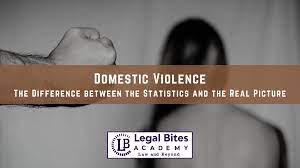
DOMESTIC VIOLENCE IN INDIA- THE DIFFERENCE BETWEEN STATISTIC AND THE REAL PICTURE. BY: J. SWAROOP CHOUDARY
[1] Section 498A The Indian penal code 1860.
[2] Dowry Prohibition Act, 1961.
[3] 'European Union (EU): Charter Of Fundamental Rights Of The European Union' (2001) 40 International Legal Materials.
[4] 'National Commission For Women' (Ncw.nic.in) accessed 20 December 2021.
[5] National Commission for Women and also sourced from the National Family Health Survey 2019-20
[6] National Commission for Women and also sourced from the National Family Health Survey 2019-20
[7] 'United Nations Charter (1945)' (Cirp.org, 2021) accessed 23 December 2021.
[8] Article 5 in The Universal Declaration of Human Rights.
[9] The Convention on Elimination of all forms of Discrimination against women (CEDAW), 1981.
[10] Dowry Prohibition Act, 1961.
[11] 304-B Indian Penal Code 1860.
[12] 113-B Indian evidence Act 1872.
[13] Indian Penal Code 1860.
[14] 113-A of Indian evidence Act 1872.
[15] The family courts Act 1984.
[16] The Indecent representation of women (Prohibition) Act 1986.
[17] The Commission of Sati (prevention) Act 1987.
[18] Protection of women from domestic violence Act 2005.
Open Access
THE EFFICACY OF LAWS IN PREVENTING CRIMES: AN IN-DEPTH ANALYSIS BY - AKSHAT DEV, ANSH PAL SINGH & ADITYA DIWAN
[1] Joshua J Mark, ‘Code of Ur-Nammu’ (World History Encyclopedia26 October 2021) <https://www.worldhistory.org/Code_of_Ur-Nammu/> accessed 20 January 2024.
[2] —— ‘Hammurabi’s Code | World Civilization’ (Lumen Learning – Simple Book Production) <https://courses.lumenlearning.com/suny-hccc-worldcivilization/chapter/hammurabis-code/#:~:text=The%20Code%20of%20Hammurabi%20is,men,%20and%20property%20owners).> accessed 20 January 2024
[3] ‘The History of the Magna Carta, 1215’ (Historic UK27 November 2023) <https://www.historic-uk.com/HistoryUK/HistoryofEngland/The-Origins-of-the-Magna-Carta/> accessed 20 January 2024.
[4] ‘Napoleonic Code | Definition, Facts, & Significance | Britannica’, Encyclopædia Britannica (2024) <https://www.britannica.com/topic/Napoleonic-Code> accessed 20 January 2024.
[5]‘Milestones: 1945–1952 - Office of the Historian’ (State.gov2024) <https://history.state.gov/milestones/1945-1952/nuremberg> accessed 20 January 2024.
[6] Bernard Harcourt, ‘Beccaria’s on Crimes and Punishments: A Mirror on the History of the Foundations of Modern Criminal Law’ (Oxford University Press 2014) <https://cccct.law.columbia.edu/sites/default/files/content/pics/Beccarias_On_Crimes_and_PunishmentsA_Mirror_on_the_History_of_the_Foundations_of_Modern_Criminal_Law.pdf>.
[7] Julia Driver, ‘The History of Utilitarianism (Stanford Encyclopedia of Philosophy)’ (Stanford.edu2014) <https://plato.stanford.edu/entries/utilitarianism-history/> accessed 20 January 2024.
[8] ‘A Deterrence Theory of Punishment on JSTOR’ (Jstor.org2024) <https://www.jstor.org/stable/3543120> accessed 20 January 2024.
[9] ‘Classical Deterrence Theory: A Critical Assessment’ (International Interactions2024) <https://www.tandfonline.com/doi/abs/10.1080/03050629608434873> accessed 20 January 2024.
[10] United Nations Office on Drugs and Crime, ‘UNITED NATIONS CONVENTION against TRANSNATIONAL ORGANIZED CRIME and the PROTOCOLS THERETO’ (2004) <https://www.unodc.org/documents/middleeastandnorthafrica/organised-crime/UNITED_NATIONS_CONVENTION_AGAINST_TRANSNATIONAL_ORGANIZED_CRIME_AND_THE_PROTOCOLS_THERETO.pdf>.
[11] ‘Crime and Disorder Act 1998’ (Legislation.gov.uk2022) <https://www.legislation.gov.uk/ukpga/1998/37/contents> accessed 20 January 2024.
[12] ‘Social Disorganization’ (obo2017) <https://www.oxfordbibliographies.com/display/document/obo-9780195396607/obo-9780195396607-0008.xml> accessed 20 January 2024.
Open Access
PARDEY MEIN REHNE DO PARDA NA UTHAO BY - TARUSHI KAPOOR
[1] Robert B. Thompson, Piercing the Corporate Veil: An Empirical Study, 76 CORNELL L. REV. 1036 (1990- 1991).
[2] Rishi Pandey, ‘Lifting Or Piercing Of Corporate Veil’ (LiveLaw, 15 December 2022)
://www.livelaw.in/know-the-law/lifting-or-piercing-of-corporate-veil-216786?infinitescroll=1> accessed 26 September 2023.
[3] S Ottolenghi ‘From Peeping behind the Corporate Veil, to Ignoring It Completely’ The Modern Law Review, vol. 53, no. 3, 1990, pp. 338–53 http://www.jstor.org/stable/1096475> accessed 30 September 2023
[4] ‘Piercing the corporate veil’ Legal Information Institute (Cornell Law School)
[5] Daimler Company v. Continental Tyre and Rubber Company (1916) 2 A.C. 307
[6] Prest v Petrodel Resources Ltd & Others [2013] UKSC 34
[7] Ibid.
[8] Costan v Manila Electric Co., 24 F (2d) 383
[9] State of U.P. & Ors v. Renusagar Power Co. & Ors. (1988) 4 SCC 59
[10] In Re: Dinshaw Maneckjee Petit (1927) 29 BOMLR 447